

Rethinking the Dog Bowl: What Emerging Science Says About Food, Timing, and Longevity
A 2025 University of Helsinki study and a 24,000-dog aging project are reshaping what we know about canine nutrition. Here is what the data actually shows about kibble, raw food, and when to feed.
Rethinking the Dog Bowl: What Emerging Science Says About Food, Timing, and Longevity
For decades, feeding advice for dogs has been shaped more by pet food marketing than peer-reviewed science. Kibble, convenient, shelf-stable, and heavily advertised as "complete and balanced", became the default choice for millions of owners without much critical scrutiny. But a wave of new research is beginning to challenge that assumption, and the findings are difficult to dismiss.
A Finnish Study That Raises Real Questions
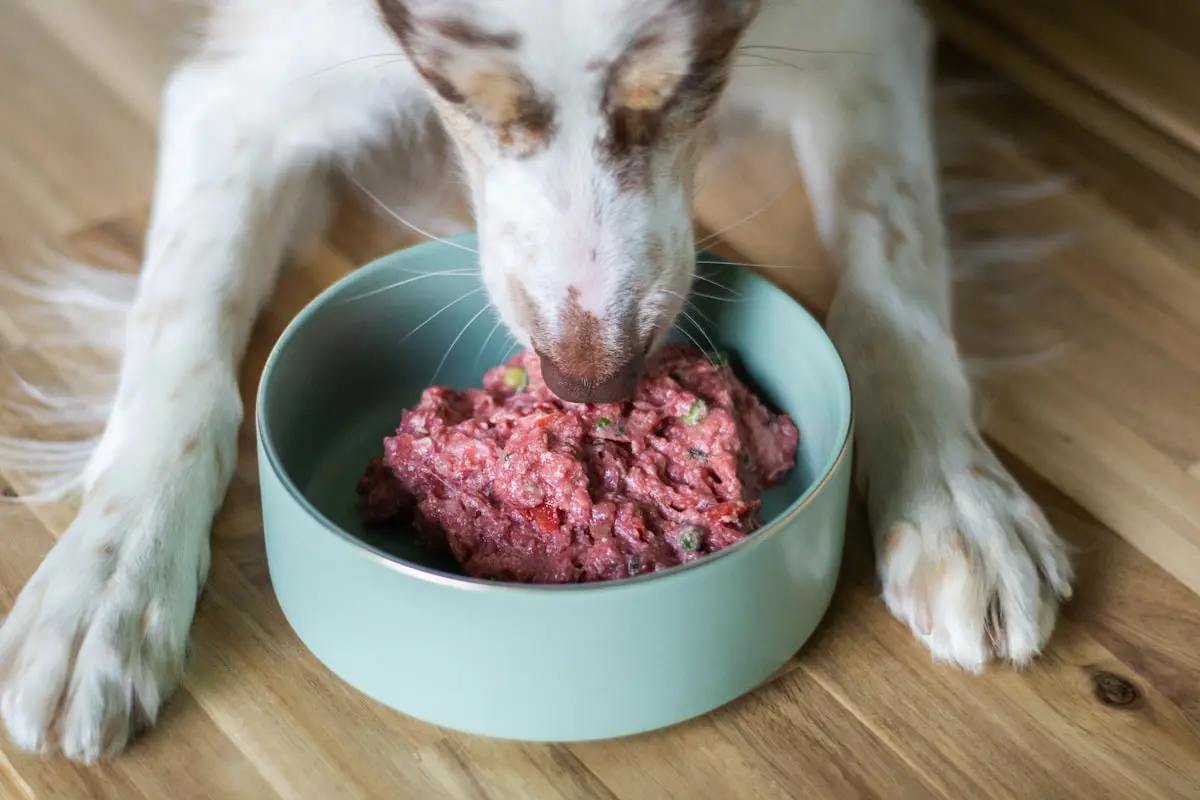
In early 2025, the DogRisk research group at the University of Helsinki published a study that sent ripples through the veterinary nutrition community. Led by Dr. Sarah Holm, the team followed 46 Staffordshire Bull Terriers divided into two groups: one fed a standard dry kibble diet rich in non-fiber carbohydrates, and another fed a raw meat-based diet high in fat and virtually free of processed carbohydrates. After an average of 4.5 months, the metabolic differences between the two groups were striking.
Dogs on the kibble diet showed increases in long-term blood sugar (HbA1c), total cholesterol, triglycerides, and body weight, biomarkers closely associated with metabolic dysfunction in both humans and dogs. Dogs on the raw food diet showed the opposite: decreasing blood glucose, blood lipids, and glucagon levels, alongside a lower triglyceride-glucose index, a marker of insulin resistance that until recently had only been used in human medicine.
"Interestingly, the kibble diet was associated with changes often linked to adverse metabolic health, while the raw food diet promoted metabolic responses generally considered favorable." - Dr. Sarah Holm, DVM, PhD, DogRisk Research Group, University of Helsinki
Dr. Anna Hielm-Björkman, who leads the DogRisk group, drew a direct parallel to human nutrition research, where fat-rich diets often lower blood lipids, while carbohydrate-rich diets raise them. For the DogRisk team, dogs represent a compelling model for studying metabolic disease across species, sharing as they do our home environments, our activity levels, and increasingly, our chronic illnesses.
Not Just What You Feed, But When
At roughly the same time, the Dog Aging Project, the largest canine health study ever conducted in the United States with data from over 24,000 companion dogs,published a separate finding that received far less attention than it deserved. Dogs fed once daily, rather than two or more times per day, showed lower cognitive dysfunction scores and lower odds of gastrointestinal, dental, orthopedic, kidney, and liver disorders, across every age group studied.
The proposed mechanism draws on research in caloric restriction and time-restricted feeding: a longer fasting window appears to activate autophagy, the body's cellular cleanup process, reduce insulin and IGF-1 signaling, and produce elevated ketone bodies that serve as a cleaner fuel source for the brain and organs. When dogs eat multiple times a day, these repair pathways remain continuously suppressed.
It is worth noting that this was an observational study, not a randomized controlled trial, so causality cannot be confirmed. Still, the breadth and consistency of the associations across so many health domains make the findings difficult to set aside entirely.
The Hidden Cost of Ultra-Processed Food
Alongside these two headline studies, a growing body of research is examining advanced glycation end products (AGEs), harmful compounds that form when proteins or fats are exposed to high temperatures during food processing. A 2024 study estimated that dogs consuming standard extruded kibble ingest approximately 120 times the AGE load of a human eating a typical Western diet, and these compounds are linked to chronic inflammation, kidney disease, and cancer. A separate 2024 study found that raw-fed dogs showed distinct gut microbiota profiles and superior protein digestibility compared to kibble-fed dogs.
None of this is an argument that all kibble is harmful for all dogs. Convenience and cost matter, and commercial diets remain a practical choice for many families. What the research challenges is the assumption of equivalence: that all "complete and balanced" diets produce similar long-term outcomes. The molecular evidence increasingly suggests they do not.
The Role of Early Detection
What makes this nutritional research particularly relevant is the way it connects to cancer and age-related disease. Dogs fed metabolically stressful diets over years accumulate the kind of chronic cellular damage that often precedes the most common conditions in middle-aged dogs: cancer, kidney failure, and cognitive decline.
By the time those conditions produce obvious symptoms, the window for meaningful intervention may already have narrowed. Liquid biopsy technology, like the DeepScan CFD test, detects circulating cell-free DNA (cfDNA) in a blood sample, capturing signals of cellular stress or early cancer activity that conventional diagnostics would miss for months or years. For dogs whose diets carry long-term metabolic risk, proactive annual screening offers a meaningful safety net.
What This Means in Practice
The conversation about dog nutrition is moving from marketing claims to molecular evidence. Diets lower in processed carbohydrates and higher in quality animal protein appear to produce more favorable metabolic outcomes. Longer fasting windows may activate cellular repair pathways linked to longevity. And monitoring for early signs of disease, rather than waiting for symptoms, can make a real difference in outcomes.
The research is accumulating, the quality is improving, and the implications for how long our dogs live are too significant to ignore.
At DeepScan Diagnostics, we believe that good nutrition is the foundation, and early detection is the safety net. Our CFD test can identify cancer, organ stress, and chronic inflammation before symptoms appear, giving you and your vet the gift of time. Learn more about the CFD test.
Frequently Asked Questions
Is raw food actually better than kibble for dogs?
The DogRisk study found that raw meat-based diets produced more favorable metabolic markers than kibble, including lower blood sugar, cholesterol, and insulin resistance. However, the study ran for only 4.5 months with a single breed, so long-term data is still limited. Raw diets also carry food safety risks around bacterial contamination that should be discussed with your veterinarian before making any switch.
Should I feed my dog once a day?
The Dog Aging Project found significant associations between once-daily feeding and better health outcomes across multiple domains in over 24,000 dogs. Because it was observational rather than a controlled trial, causality cannot be confirmed. Once-daily feeding is not recommended for puppies, toy breeds prone to hypoglycemia, or diabetic dogs. Always check with your vet first.
What are advanced glycation end products, and why do they matter?
AGEs form when proteins or fats react with sugars at high heat, extensively during kibble manufacturing. Research suggests dogs on extruded kibble accumulate far higher AGE levels than dogs on minimally processed diets, and these compounds are linked to chronic inflammation, kidney disease, and cancer.
Can diet affect my dog's cancer risk?
Growing evidence links chronic metabolic stress (elevated blood sugar, insulin resistance, and accumulated AGEs) to increased cancer risk over time. While no single study has proven that switching diets prevents cancer, the biological pathways connecting diet, inflammation, and tumor development are well-established.
References
-
DogRisk Research Group, University of Helsinki (2025) Holm S, et al. "The effect of a kibble diet versus a raw meat-based diet on energy metabolism biomarkers in dogs." The Veterinary Journal (2025) 314:106462. Read the study
-
Dog Aging Project, Feeding Frequency Study (2022) "Once-daily feeding is associated with better health in companion dogs." GeroScience, 2022. Read on PubMed
-
Advanced Glycation End Products in Dog Diets (2024) Comparison of AGE levels in dogs consuming minimally processed vs. extruded diets. Read the study
-
Gut Microbiota and Inflammation in Raw vs. Kibble-Fed Dogs (2024) "Fecal microbiota composition, serum metabolomics, and markers of inflammation in dogs fed a raw meat-based diet compared to those on a kibble diet." Frontiers in Veterinary Science, 2024. Read the study